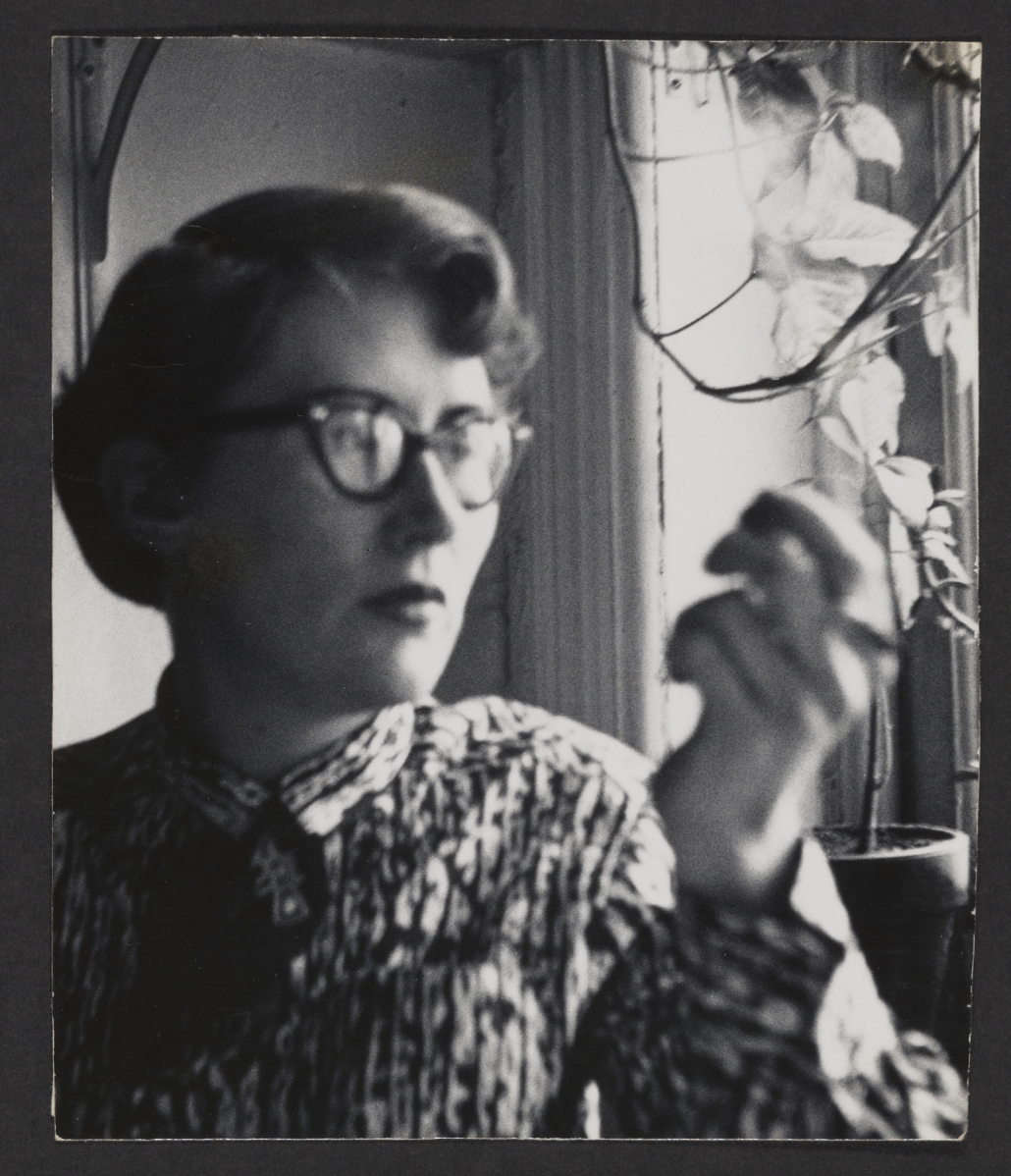
Joseph Solman: Avery, Gottlieb, and Rothko's Modernist Colleague
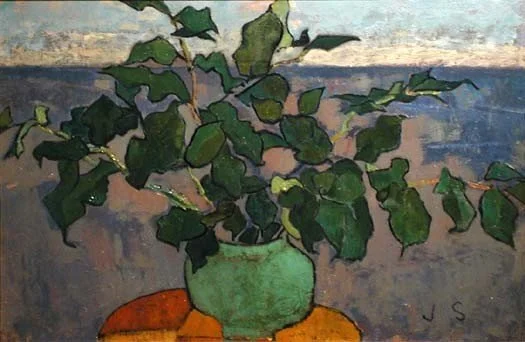
Joseph Solman, Open Window, oil on board, c. 1955
(This is an essay I have expanded from the talk I gave at the Cape Ann Museum and Sawyer Free Library in Gloucester.)
The Cape Ann Museum has recently opened a masterful exhibit - perhaps a watershed moment for Cape Ann art - focusing on three summers in the 1930’s when artist-friends Milton Avery, Adolph Gottlieb, and Mark Rothko vacationed together in Gloucester. The work ranges from delightfully temporal -
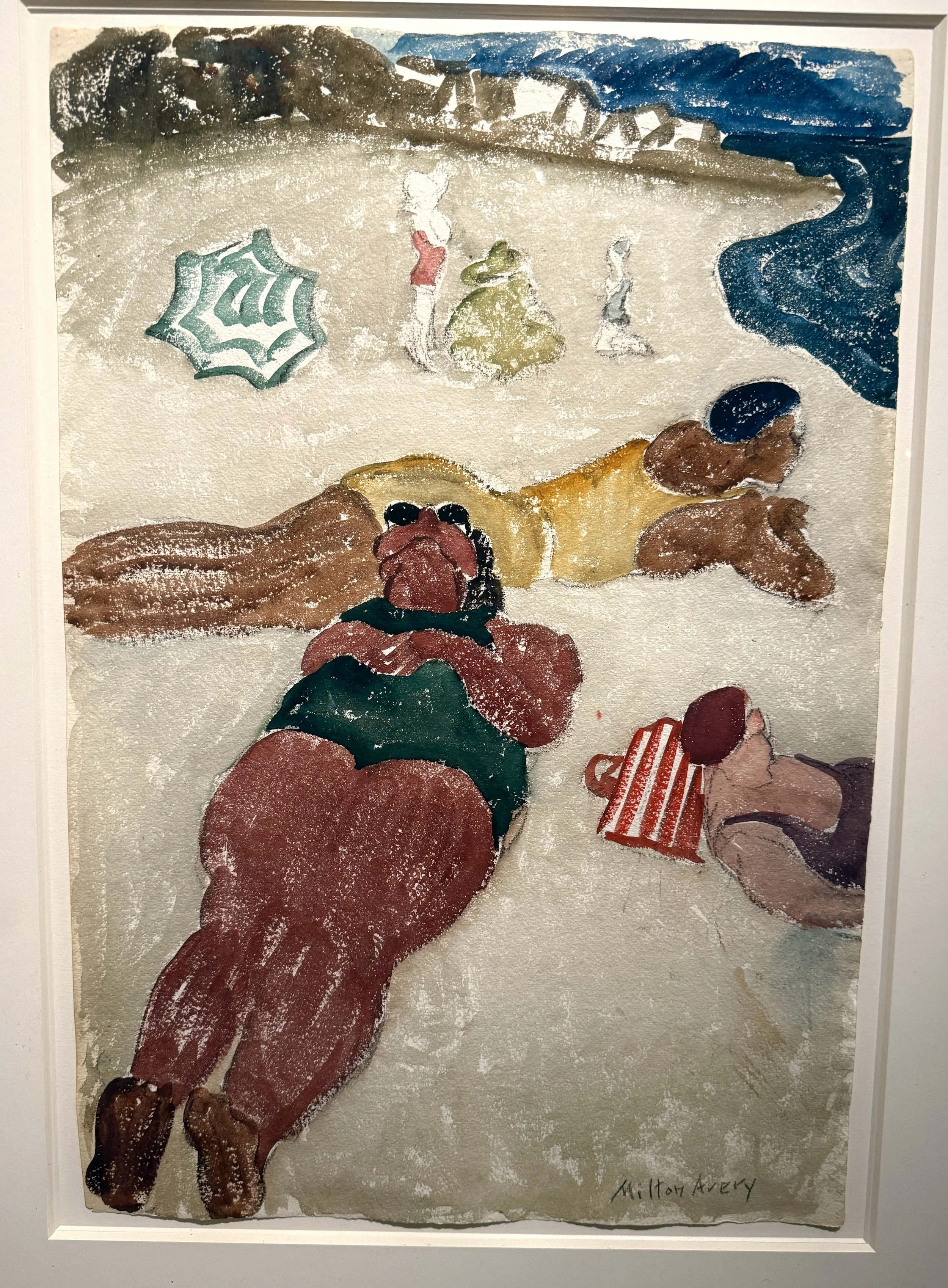
Milton Avery, Lazy Afternoon, 1930’s, watercolor on paper
to transcendent.
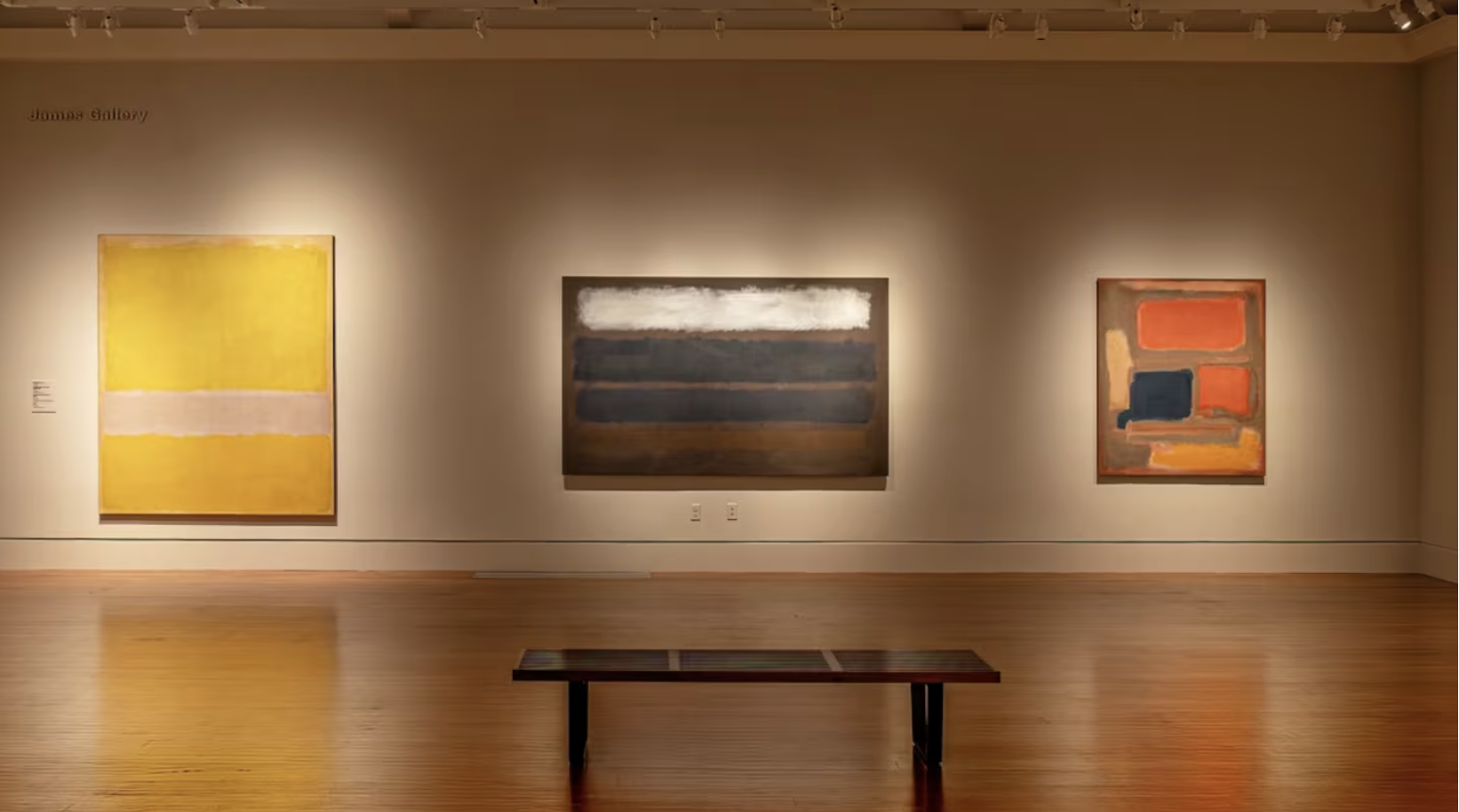
Mature works by Mark Rothko in the chapel-like gallery of "Avery, Gottlieb & Rothko: By the Sea," at the Cape Ann Museum. STEVE ROSENTHAL/CAPE ANN MUSEUM
and previews the transformations each of them would make in the coming decades. Gottlieb and Rothko would become the cornerstones of the Abstract Expressionist movement. Avery, their elder mentor, would produce large luminous works in response, while staying grounded in the material subject.
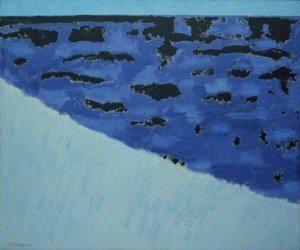
Milton Avery, Sea Grasses and Blue Sea. 1958. Oil on canvas, 60 1/8" x 6' 3/8", Museum of Modern Art: Gift of friends of the artist. © 2007 Milton Avery Trust / Artists Rights Society (ARS), New York
The artist Joseph Solman - for a while - was these artists’ peer, and sometimes friend. In the 1920’s and 30’s he socialized with them in New York City, exhibited with them, and received - in some cases - the same professional attention. Solman also came to Cape Ann to paint.
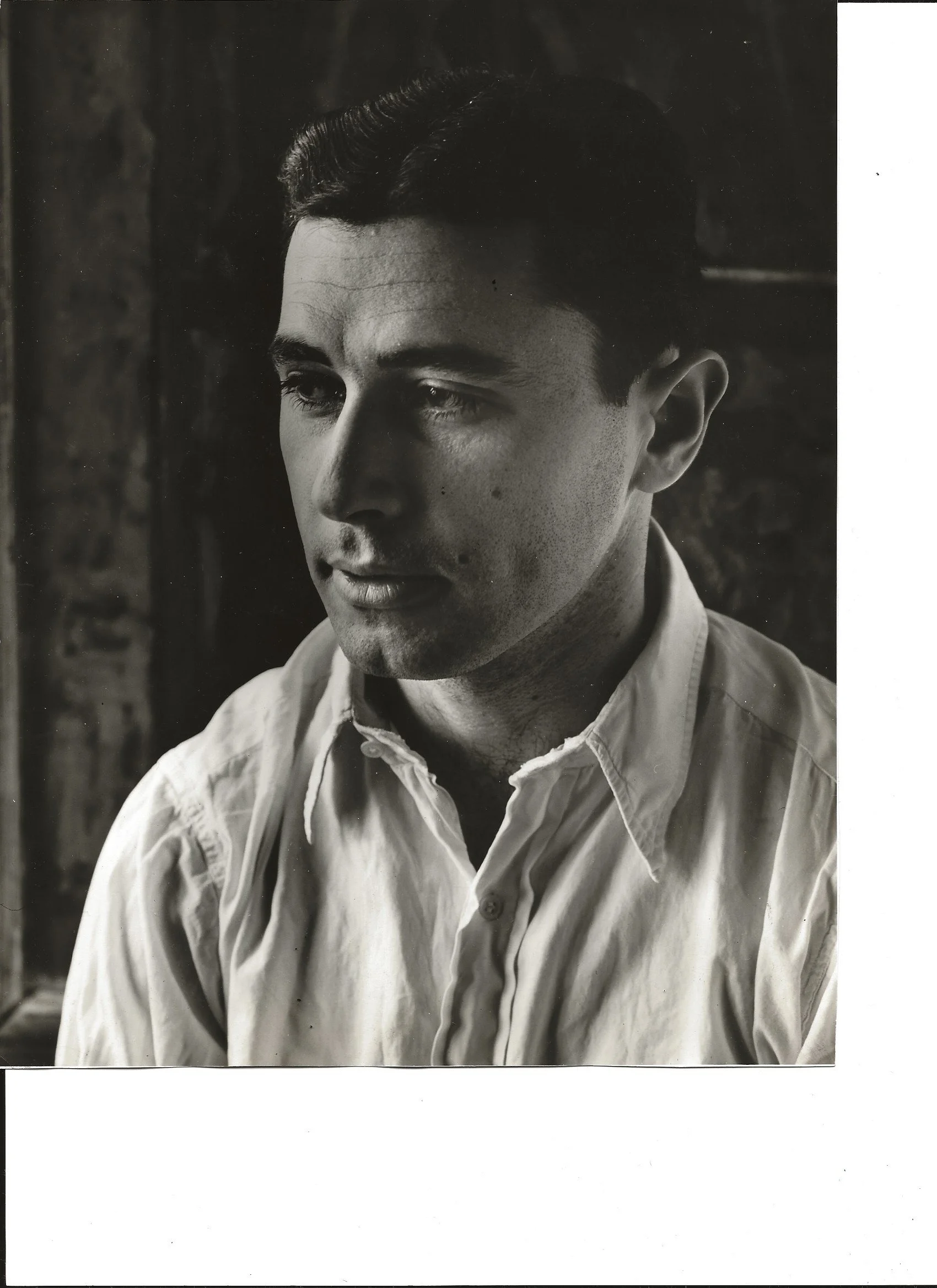
New York City was an incredibly exciting place to be an artist in the 1920’s and 30’s. The traditional ways of making painting had been shattered in the last century, starting with Manet. Then art raced towards transformative new works like those of Seurat, Gauguin, Cezanne, and Van Gogh.
Joseph Solman was 20 years old when he saw these artists at the inaugural exhibit for the Museum of Modern Art in 1929. This show was monumental for Solman. These artists, along with Matisse, Klee, and DeChirico, were fueling this young man’s artistic energy at the time.
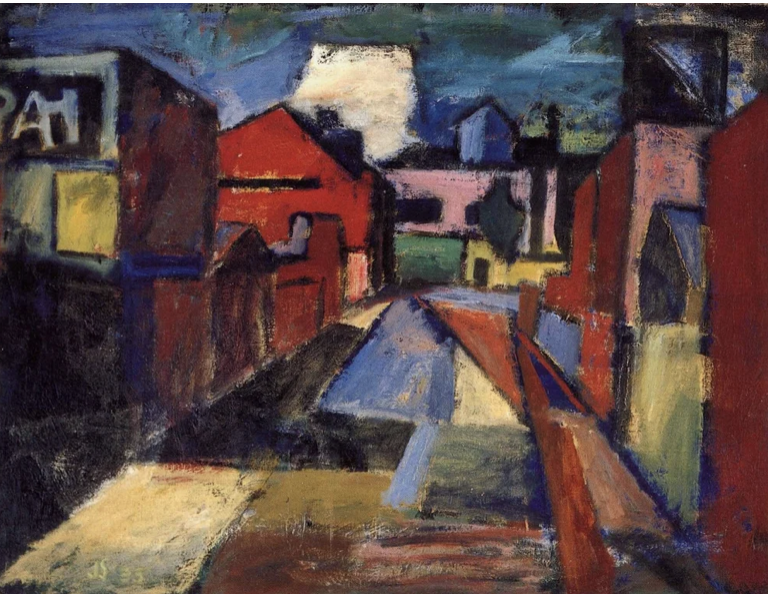
Jospeh Solman, Street in Brooklyn, oil on canvas, 24 x 30, 1934
In the 1930’s Solman was creating dramatic streetscapes with vivid palettes, much like the artist Rouault whom he was also following. Critics admired the rich quality of the color and the mystery in these early Solman pieces, acknowledging him as a champion of the new Modernism. Solman was actually much more advanced in his vision - much more courageous in fact - than his peers in the 1930’s, including Gottlieb and Rothko, who were producing - among other works - somber portraits that leaned towards the social realism popular then.
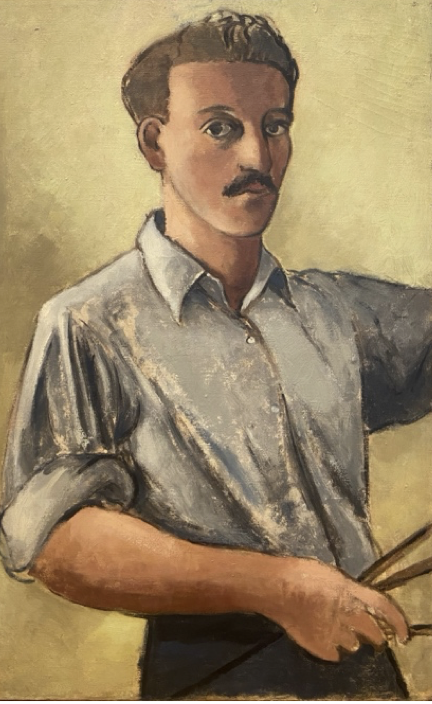
Adoph Gottlieb, Untitled (Self Portrait), 1928, The Adolph and Esther Gottlieb Foundation.
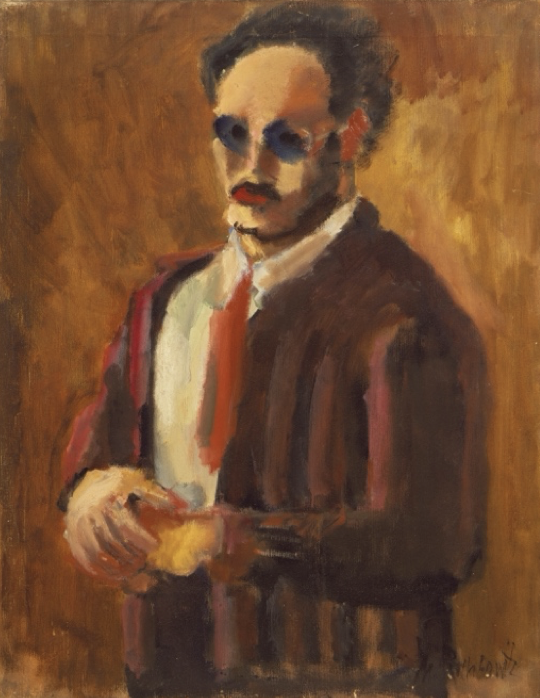
Mark Rothko, Self Portrait, 1936, copyright 1998 by Kate Rothko Prizel and Christopher Rothko, Artists Rights Society, New York.
In the 1930’s Milton Avery had captured the attention of many younger New York artists like Gottlieb and Rothko, but also Joseph Solman. Avery, using broad planes of bold color and simple shapes was not imitating life but reimagining it on a two dimensional surface. He was showing artists in New York how to abandon traditional ways of seeing, and he was giving them permission to do it.
This is Joseph Solman remembering the 1930’s in New York City in an interview recorded with Avis Berman for the Smithsonian Institute:
“In the early to mid-1930s, someone brought my wife and myself to meet the Avery's when they were living on 11th Street. I think they were living there then. Anyway, there I first met Rothko and Gottlieb and many other admirers of Avery. We all liked his work and we'd sometimes meet there socially or something, and he'd pull out 14 or 20 new canvases. He didn't speak much, but he had a kind of dry wit and Sally would serve the wine or tea or coffee or whatever. And if the critics had listened to us then, they would have uncovered it much more quickly than they did. I'm talking about '1933, 4, 5. He (Avery) left quite a mark - on particularly early Gottlieb. His influence was very strong. And to some extent on Rothko and then to a little extent on me at one phase of my life.”
The critic Clement Greenberg ascribes the rise of Abstract Expressism to Milton Avery. This is probably what Solman is referring to when he says “if the critics had listened to us then, they would have uncovered it much more quickly than they did” - they would have uncovered Avery’s influence, that flattening of images and inventive color, the preview of Abstract Expressionism.
Solman describes his relationship with Rothko in the 1930’s as “we were just mutual admirers of Avery,” but Solman and his wife would - for a while - be social friends with Rothko and his first wife, Edith.
Joseph Solman and Mark Rothko also exhibited together at the Secession Gallery in 1934. And then Solman exhibited with both Gottlieb and Rothko as members of The Ten, a group of artists aligned to protest the New York institutions - particularly the Whitney - which were ignoring the European Expressionism that these young artists were exploring on their easels. Critics singled out Schanker, Harris, and Solman in these exhibits, dismissing Mark Rothkowitz’s (Rothko’s) work as uneven. About his own work at this time, Solman says, “I was more abstract than Rothko.”
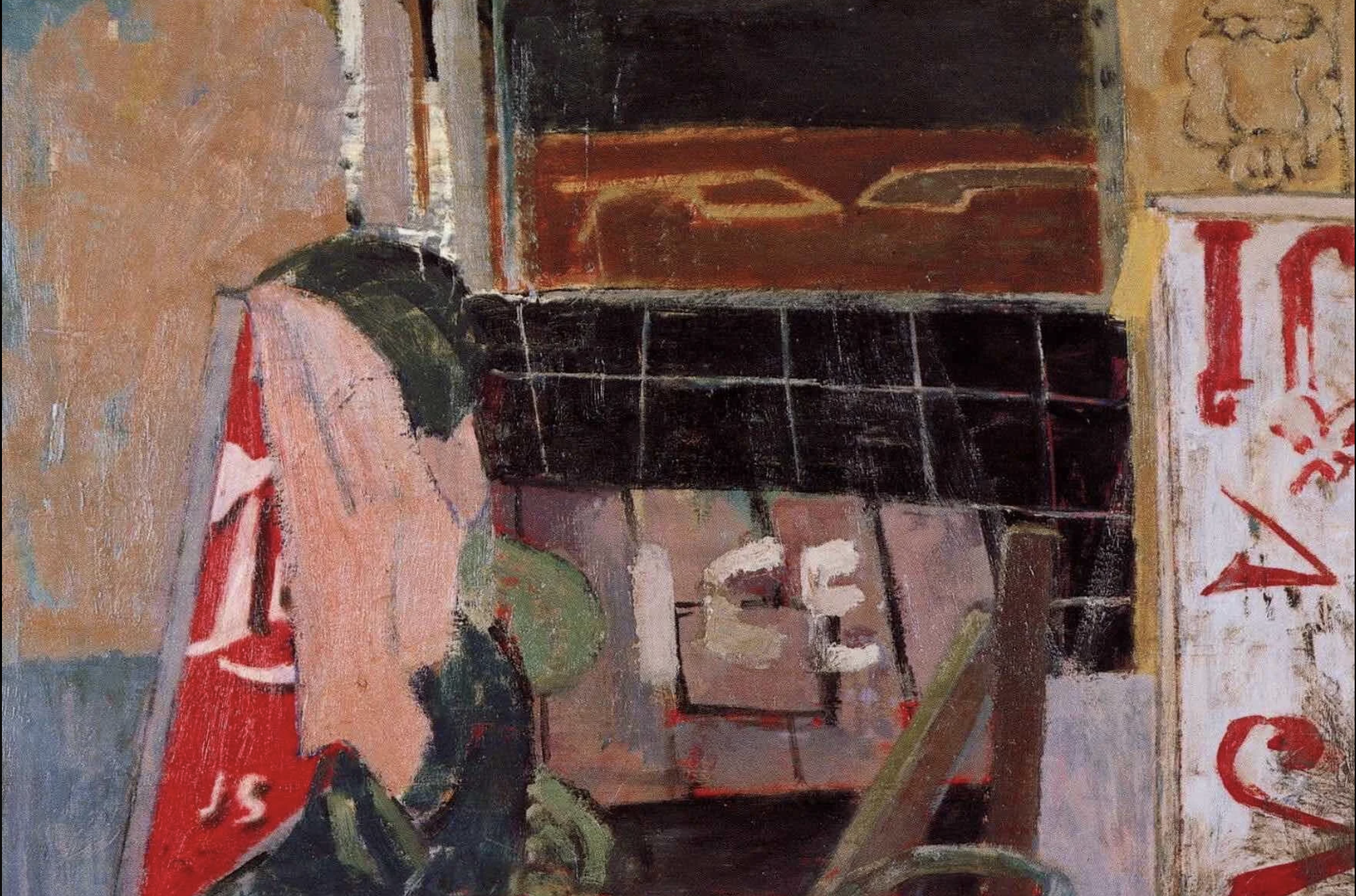
Joseph Solman, Ice Cellar, oil on panel, 26 x 34, 1935
In 1943 The Phillips Collection held the first one person show of Milton Avery’s work.
In 1949, the Phillips Collection held a one person show of Joseph Solman’s work.
Then, by the start of the 1950’s, Gottlieb and Rothko moved further towards total abstraction. In a 1943 letter to the New York Times art editor, Gottlieb and Rothko declared their intent as “the simplest expression of the complex thought.” By the late 1940’s Rothko - in his painting - was seeking truth.
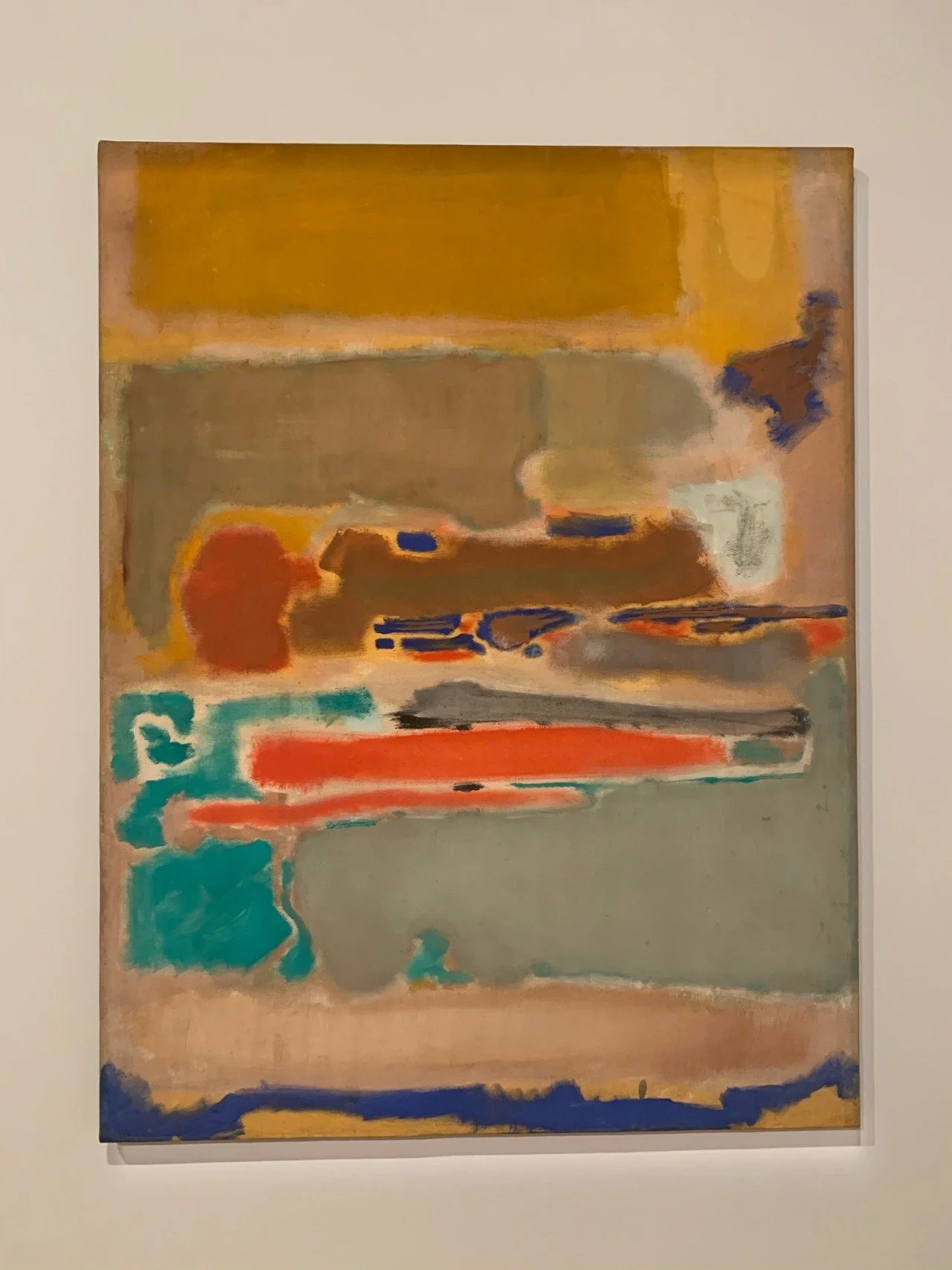
Mark Rothko, Multiform, oil on canvas, 1948, National Gallery of Australia
Joseph Solman was painting studio windows,
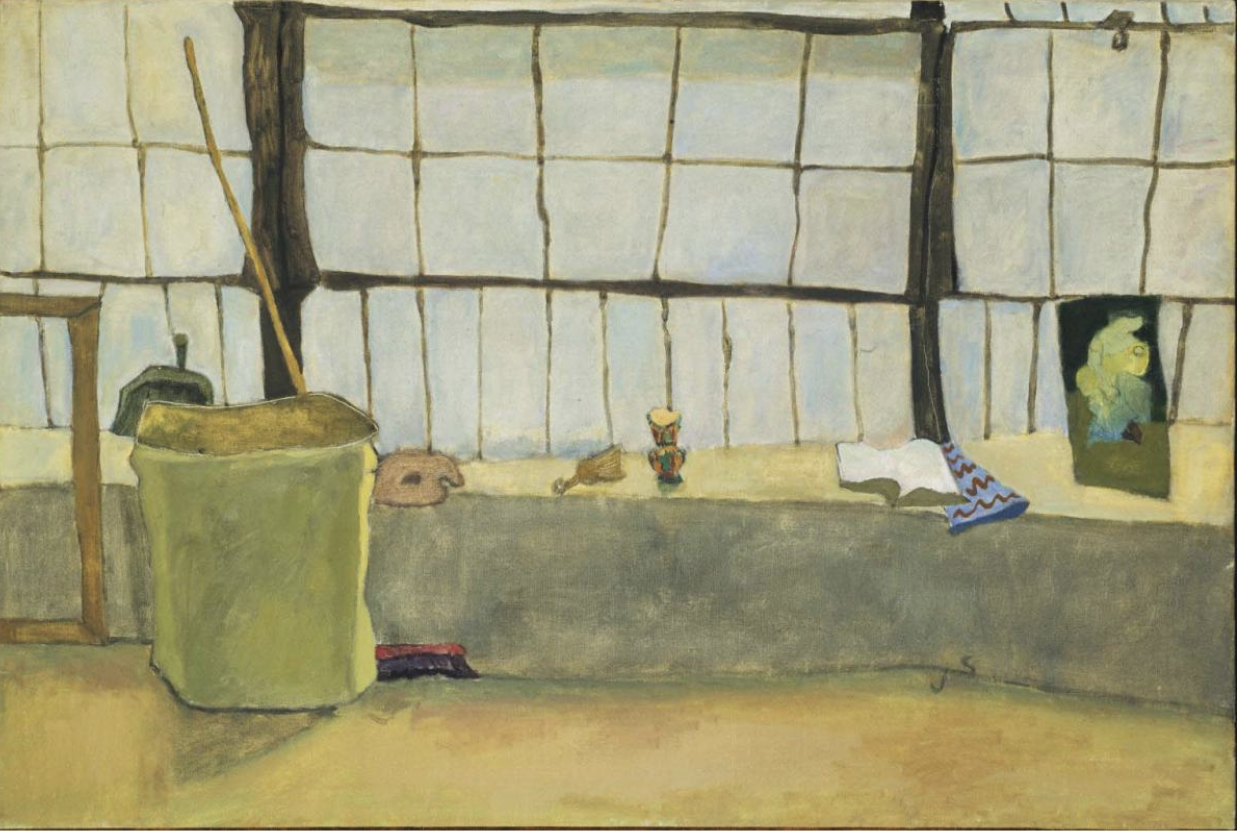
Joseph Solman, Studio Interior, oil on canvas, 1947, The Phillips Collection, Washington, D.C.
and the way the sky meets the earth. And all kinds of bodies. Solman once said he liked his women clothed
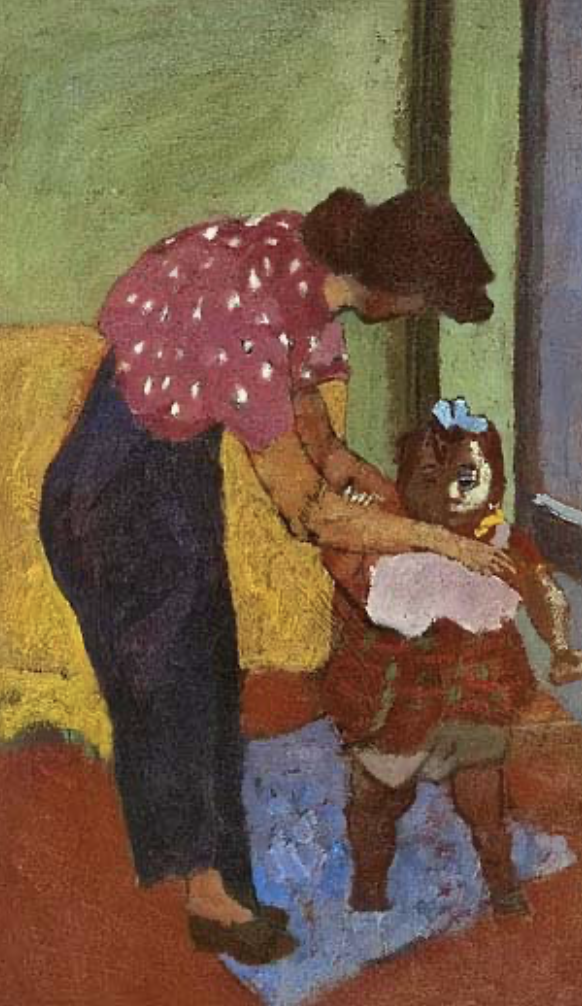
Joseph Solman, Mother and Child, oil on board, 20”x12”, 1945, Mercury Gallery
and his trees naked.
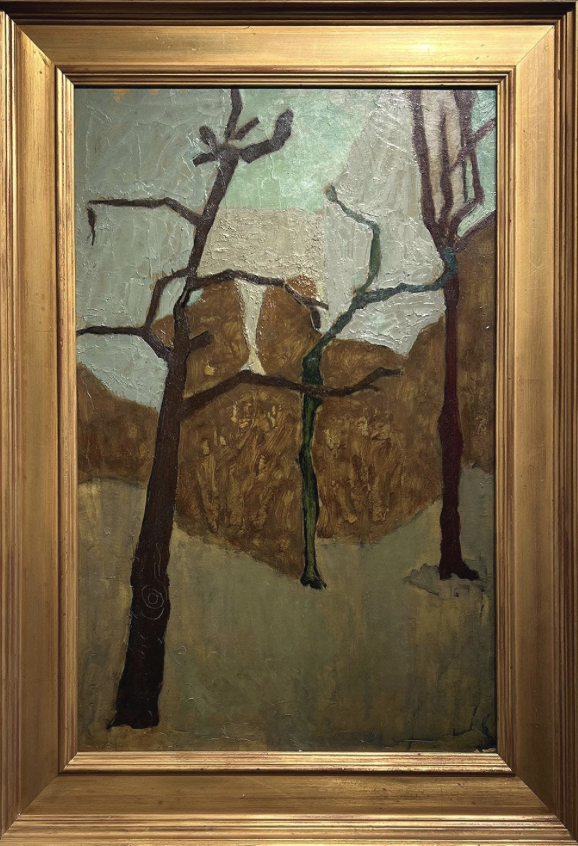
Joseph Solman, Trialogue, Trees in Herald Square, oil on board, 24”x16”, 1942
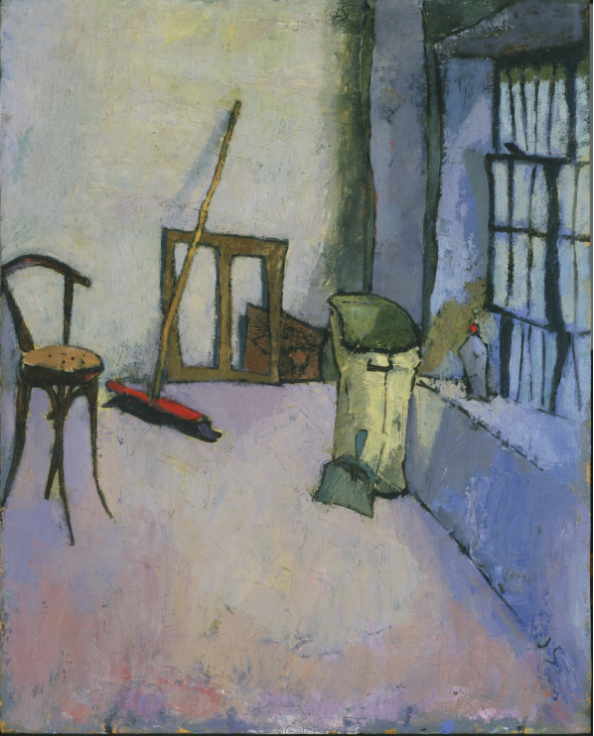
Joseph Solman, The Broom, 1947, The Phillips Collection
Solman’s brooms are the essence of a broom, but they are something else, too - Solman took the Avery lessons of flattening the plane, and breaking all the rules about color, and those lessons freed him to retell what the world says about being human. Solman’s brooms tell us something we didn’t know about leaning.
While Abstract Expressionism was luring many New York City artists into its conceptual embrace, and many found fame there, Solman was never convinced that pure abstraction was legitimate. A stark divide formed in New York between those artists who embraced total abstraction and those who did not. Solman, Avery, Gottlieb and Rothko all started out on the same side. Abstract Expressionism divided them.
Solman’s position was that most of these artists were doing something without integrity, except for Rothko. As much as he did not trust Abstract Expressionism, Solman would remain linked respectfully to Rothko, even when Rothko became an icon of that movement.
Joseph Solman visited Rothko just six months before he died of suicide. One of Solman’s own collectors had asked to meet Rothko. Solman says in the Smithsonian interview that Rothko was happy to see him, but in that meeting Solman confessed that he was not fond of many aspects of Abstract Expressionism, but, he told his old friend, he was very fond of his work.
The struggle with light, color, and humanity is what Joseph Solman prized in art. He said of Rothko, “I think his late work is his great work.” Surprisingly, that is Rothko’s most radically abstract work.
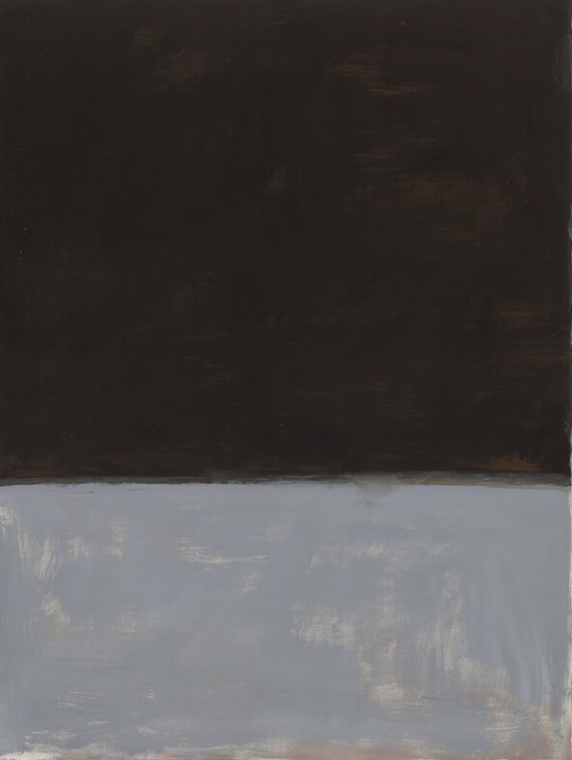
Mark Rothko, Untitled, acrylic on canvas, 90 3/8 x 69 ¼, 1969, Copyright
Copyright © 1998 Kate Rothko Prizel and Christopher Rothko, National Gallery of Art
In the interview Solman ends this memory regretting that he was not smart enough then to recognize that Rothko was very depressed.
Like his friends in the Cape Ann Museum exhibit, Joseph Solman also came to Cape Ann to paint, but he came in the late 1940’s.
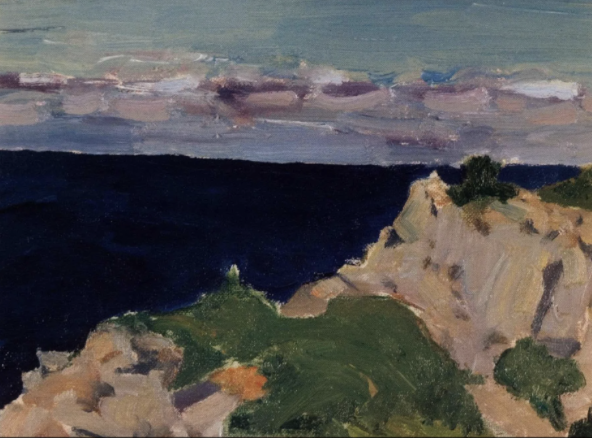
Joseph Solman, Headlands, c. 1940, Joseph Solman, oil on board.
After a few summers in Rockport, Solman purchased a cottage in Gloucester which his daughter owns today. You can see Solman working in this cottage - and much more about his life and work - in my Color of Light video on him here.
Many of these hard lines about art have softened. The categories have proved artificial, as Joseph Solman had shown us years ago; it’s not about abstraction vs. figuration; it’s about the honesty, integrity, struggle. When those elements generate a work of art, that satisfying sense of awe we receive from it is the same, be it a leaning broom or a shimmering square of color.
And you can find more Solman works at these two sights:
mercurygallery.com
Solmanart.com
RESOURCES:
Chanin, A.L., Joseph Solman, Crown, 1966.
Rathbone, Eliza, March Avery Cavanaugh (Contributor), Sean Cavanaugh (Contributor), Patricia Favero (Contributor), Adam Greenhalgh (Contributor), Sanford Hirsch (Contributor), Renée Maurer (Contributor), Martha Oaks (Contributor), Kate Rothko Prizel (Contributor), Christopher Rothko(Contributor) , Avery, Gottlieb, and Rothko: By The Sea, Rizzoli Electa, 2026.